Windshield Replacement Cost in Arizona: Why Most Drivers Pay $0
The question comes up every time someone gets a chip or crack in their windshield: how much is this going to cost? The honest answer for most Arizona drivers is nothing — or very close to nothing. But why that's true, and what it actually means for your specific situation, is worth understanding before you call your insurance company and get the runaround.
The short answer for most Arizona drivers: $0 with comprehensive
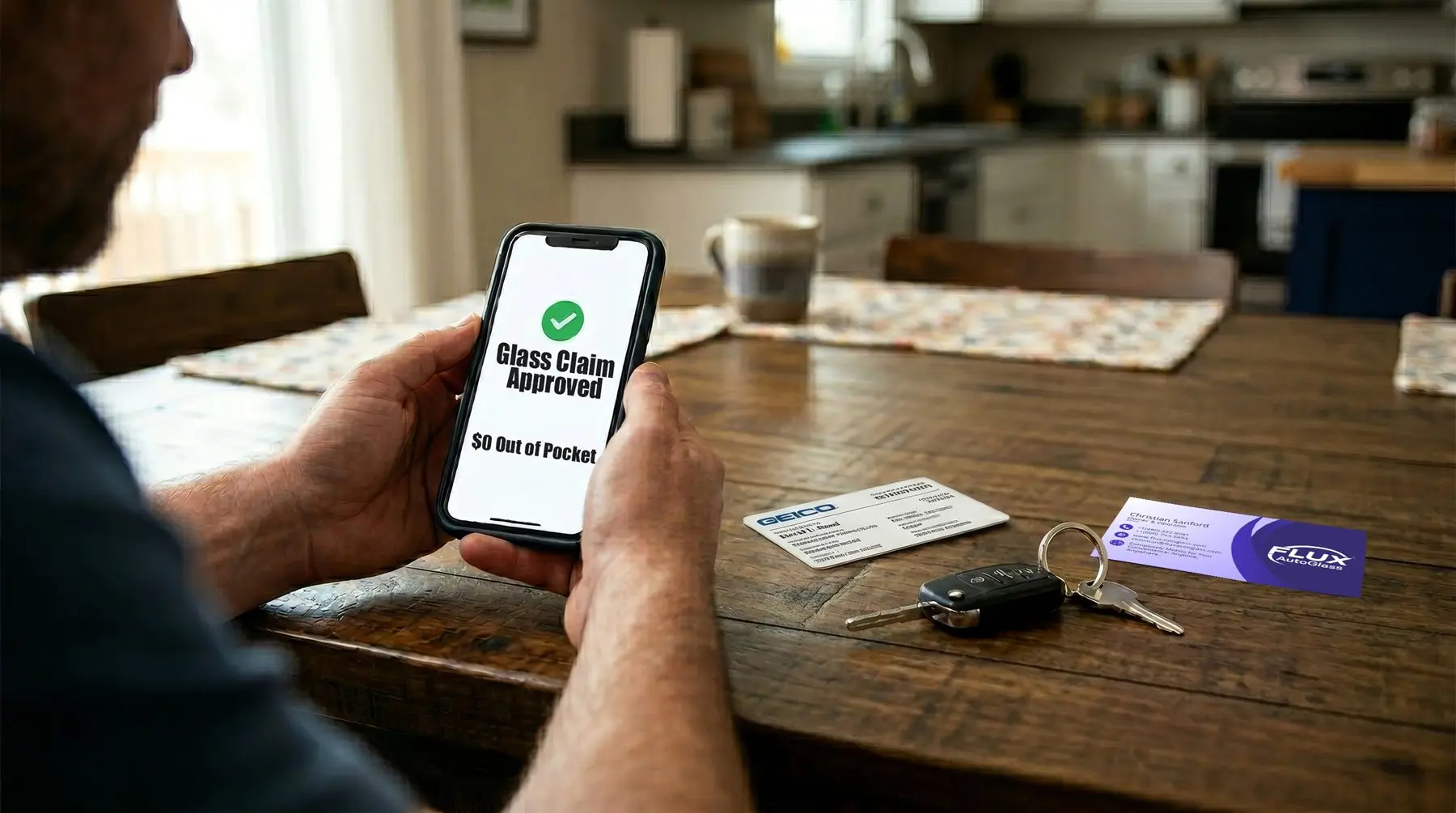
If you carry comprehensive auto insurance in Arizona and your policy includes a glass waiver endorsement, your windshield replacement is covered at no cost to you. No deductible, no co-pay, no balance billing. Your insurer pays the shop directly, and you pay nothing.
This is not a loophole or a special program — it's how Arizona's insurance law works. Under ARS 20-264, insurers are required to offer comprehensive policyholders a glass coverage option that carries no deductible, and it applies to a large majority of drivers in the state. The key is having comprehensive coverage with the glass waiver endorsement active on your policy. Most comprehensive policies in Arizona include it, but it's worth confirming directly with your carrier.
Ask your carrier: "Does my policy include a glass waiver endorsement?" If yes, your windshield replacement is $0. If no, or you're unsure, call us — we'll verify your coverage before scheduling.
What comprehensive coverage actually covers for glass
Comprehensive insurance covers damage to your vehicle that's not caused by a collision — weather events, theft, vandalism, falling objects, and yes, glass damage from road debris. A rock chip from the highway, a crack from a temperature swing, a shattered rear window from a break-in — all of these are comprehensive claims.
The glass waiver endorsement is a specific feature within comprehensive coverage that eliminates the deductible for glass claims only. On a standard comprehensive policy, you'd normally pay your deductible (often $500 to $1,000) before coverage kicks in. With the glass waiver, that deductible is waived entirely for glass claims — meaning the first dollar of cost is covered by your insurer, not by you.
Comprehensive coverage without the glass waiver would still technically cover a windshield replacement — but you'd pay your full deductible first, and for most repairs, the deductible exceeds the cost of the work. That's a bad deal, and it's why the waiver endorsement matters.
What ARS 20-263 actually does
Arizona Revised Statutes 20-263 is the state law that governs how insurance companies can use claims history to calculate premiums. The relevant provision for auto glass: insurers are prohibited from surcharging your premium as a result of a glass claim filed under comprehensive coverage.
This means that filing a glass claim — even multiple glass claims — cannot raise your insurance rates in Arizona. The claim is non-chargeable, meaning it doesn't count against you the same way a collision claim or at-fault accident would.
Some drivers are surprised by this, and some insurers are not eager to volunteer it. If your carrier implies that a glass claim might affect your rates, you can cite ARS 20-263. The protection is real and enforceable. Filing a glass claim in Arizona is not a risk to your premium — it's using a benefit you've already paid for.
What happens if you don't have a glass waiver
If your comprehensive policy does not include a glass waiver endorsement, your glass deductible still applies. In most cases, this means you'd owe your deductible amount toward the cost of the replacement. The total cost of a windshield replacement varies based on several factors:
- Your vehicle's year, make, and model — some vehicles have simpler glass and some have significantly more complex windshields with multiple sensors, cameras, and heated elements
- Whether ADAS calibration is required — vehicles with forward-facing cameras typically need calibration after replacement
- The type of glass used — OEM glass versus OEM-standard glass can affect cost
- Any additional features in the original glass, such as acoustic interlayers, heated wiper park zones, or solar-control coatings
Typical windshield & auto glass prices in Arizona
Below are typical cash (out-of-pocket) price ranges in the Phoenix metro and Tucson. With comprehensive coverage that includes a glass waiver, most drivers pay $0 — these ranges mainly matter if you're paying yourself or have a deductible.
| Service | Typical cash price (AZ) |
|---|---|
| Windshield — standard (no ADAS) | $250–$400 |
| Windshield — with ADAS camera (incl. calibration) | $450–$900 |
| Windshield — luxury / HUD / acoustic | $700–$1,500+ |
| Back glass (rear window) | $250–$500 |
| Door / side window | $200–$450 |
| Quarter / vent glass | $200–$400 |
| Windshield chip repair | $60–$150 (often $0 with insurance) |
| ADAS calibration (added on its own) | $150–$400 |
Ranges are estimates for cash/out-of-pocket jobs and vary by vehicle, glass type, and features — they are not a quote. For an exact price for your specific car, or to confirm your $0 insurance coverage, get a free quote or call (800) 793-5894.
The Deductible Assistance Program
For customers whose policies include a glass deductible, Flux Auto Glass offers a Deductible Assistance Program. This program is designed to reduce or eliminate the out-of-pocket cost for customers who technically have coverage but still face a deductible payment.
We verify your coverage before your appointment, calculate what you'd owe under your policy, and explain what the program can cover in your specific case. In many situations, the combination of your insurance payout and the Deductible Assistance Program means you pay nothing at all — even with a deductible policy. Call us to find out what your situation looks like before assuming you'll have to pay out of pocket.
What to ask your insurance company
When you call your insurer to start a glass claim, the most important question to ask — before anything else — is: "Does my policy include a glass waiver endorsement?" This single question determines whether your replacement is $0 or whether a deductible applies.
If they say yes, ask for your claim number and let them know you'll be using Flux Auto Glass. They may recommend their preferred network — you're not required to use it. Under Arizona law (ARS 20-469), you have the right to choose any licensed auto glass shop, and your coverage remains the same regardless of which shop you pick.
If they say no, or if you have a high deductible, call us before deciding what to do. There may be options available through our Deductible Assistance Program that change the math significantly.
How the claim process actually works
When you call or text Flux Auto Glass to start a quote, we ask for your insurance carrier name and policy number. From there, we handle the verification call directly with your insurer — confirming your coverage, opening the claim if you haven't already, and getting authorization for the work. This typically takes a few minutes.
Once coverage is verified and the claim is open, we schedule your appointment. A technician comes to your location with your VIN-matched glass. The install is completed on-site — typically in about an hour. We submit the invoice directly to your insurer. You sign off on the completed work. That's it. There's no paperwork for you to file, no waiting for reimbursement, and no upfront payment on policies with a glass waiver.
For more detail on the full insurance claim process and how we work with your carrier, see our insurance claims page.
Common cost questions
How much does a windshield replacement cost in Arizona?
For most vehicles, cash prices run about $250–$400 for a standard windshield and $450–$900 when ADAS camera calibration is required. Luxury, heads-up display, or acoustic windshields can run higher. Most insured Arizona drivers with glass coverage pay $0.
Why is my windshield more expensive than I expected?
Most vehicles built since about 2018 have a forward-facing ADAS camera mounted to the windshield that must be recalibrated after replacement. Calibration, plus features like acoustic glass, heating elements, or a heads-up display, raise the price.
Does insurance cover the full cost?
If your comprehensive policy includes glass coverage, yes — you pay $0, including ADAS calibration. Arizona law (ARS 20-264) requires insurers to offer that coverage, and most comprehensive policies include it. We verify before any work starts.
How much is ADAS calibration?
On its own, about $150–$400. When it's part of a windshield replacement, we coordinate it in the same appointment, and it's covered at $0 on policies that include glass coverage.